
Divisions
Sustainability Division
The Sustainability Division comprises a team of both Japanese and international faculty members working toward the realization of carbon neutrality by understanding the processes of absorption and emission of various greenhouse gases (GHGs), and estimating their overall budgets (GHG budgets).
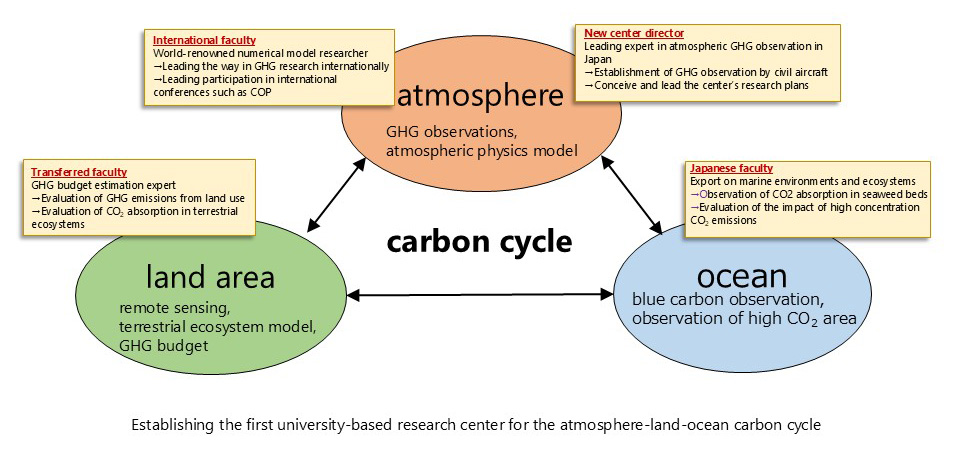
To elucidate the complex dynamics of the carbon cycle—including the terrestrial, oceanic, and atmospheric spheres—an integrated research framework has been established. Through this comprehensive system, the Sustainability Division plays a crucial role in strengthening the Center’s position as a regional hub for GHG research in Asia.
The division actively participates in several international research networks and promotes collaborative studies related to the carbon cycle. In the atmospheric field, the division is engaged in GHG observation and atmospheric physics modeling. In the terrestrial field, it estimates GHG budgets using remote sensing and ecosystem modeling. In the marine field, the team conducts dynamic studies of emission “hotspots” using marine CO₂ monitoring.
Another major mission is the establishment of a nationwide GHG education hub in collaboration with universities. This hub aims to build a robust educational foundation for nurturing the next generation of environmental leaders by working closely with high schools, universities, and research institutions across Japan.
Current Research Focus
One of the Sustainability Division’s key recent achievements is the first integrated estimate of greenhouse gas (GHG) budgets—covering CO₂, CH₄, and N₂O—for the Southeast Asia region. This area is notable for its significant GHG emissions from both anthropogenic and natural sources, making it a critical focus for climate studies. The research provides scientific evidence to support national climate policy efforts in the region.
Moreover, these findings are expected to contribute to regional progress toward the goals of the Paris Agreement, by enabling countries to better understand and manage their emissions within a comprehensive carbon accounting framework.
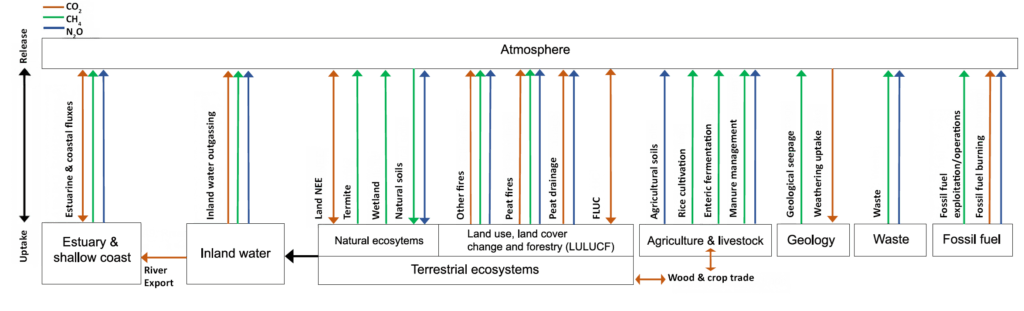
Kondo M., et al. the greenhouse gas budget of Southeast Asia for the 2000s−2010s and progress toward achieving carbon neutrality (Accepted)
Kondo M., et al. (2022) Are land-use change emissions in Southeast Asia decreasing or increasing? Global Biogeochemical Cycles, e2020GB006909. https://doi.org/10.1029/2020GB006909
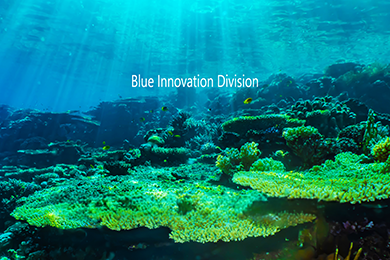
Blue Innovation Division
The ocean functions as one of the Earth’s largest carbon sinks. The Blue Innovation Division is actively engaged in elucidating the mechanisms behind this carbon sink function, projecting its future dynamics, and exploring its potential utilization in achieving carbon neutrality.
In addition to sequestering carbon, marine ecosystems provide a wide range of benefits to humanity. By comprehensively evaluating these extensive ecosystem services, the division aims to contribute to the sustainable development of human society into the future.
Current Research Focus
Nationwide Blue Carbon Observation Network: Blue carbon, which has recently drawn significant attention in the context of marine carbon sinks, refers to carbon sequestered in the ocean through coastal vegetation closely connected to human life. In particular, seaweed beds and seagrass meadows are considered the most important contributors to blue carbon. However, quantitative assessments of their carbon sequestration capacity remain inadequate. To address this, we are conducting a comprehensive evaluation of blue carbon across Japan’s coastal vegetated areas, using marine research facilities affiliated with universities nationwide as observation hubs.
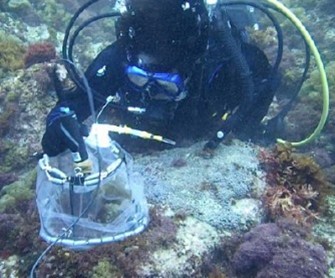
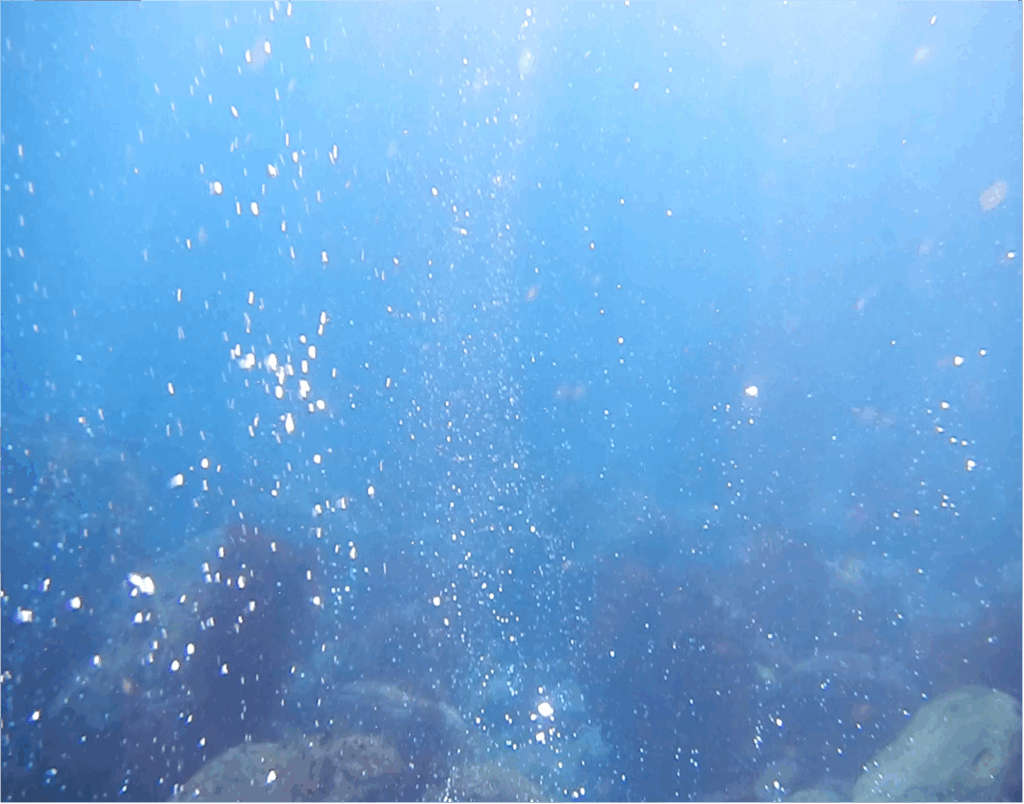
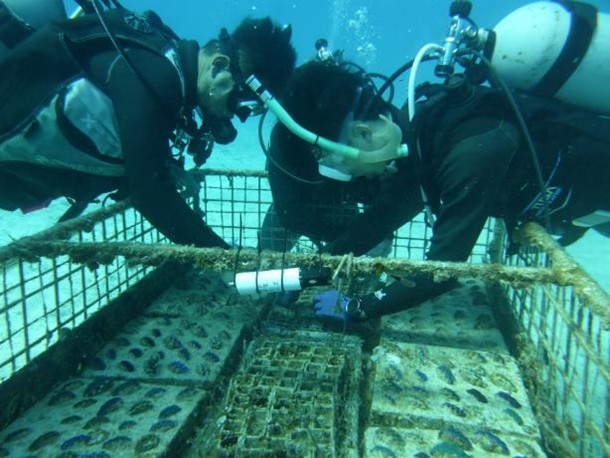
Natural CO₂ Seep Zone Studies: Increased atmospheric CO₂ has various impacts on marine ecosystems, but the response differs among organisms, making future ecosystem projections under climate change scenarios challenging. To overcome this, we are studying marine areas where CO₂ naturally seeps from the seafloor, treating them as analogs of future ocean conditions. Through this research, we aim to clarify how biodiversity, ecosystem functions, and carbon sequestration capacities may respond under projected climate change conditions.
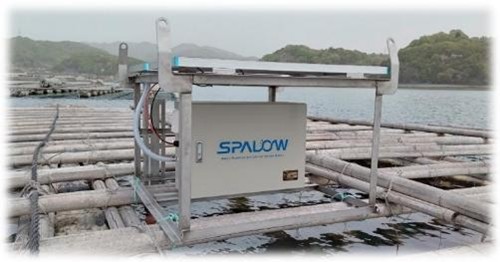
- Utilization of Coastal Ecosystems: Coastal marine areas are closely linked with human activities, such as fisheries. In Hiroshima, oyster farming is a prominent industry, and increasing plankton productivity, a key food source, could enhance aquaculture yields. Additionally, new initiatives are exploring the use of discarded oyster shells for carbon sequestration. Other ongoing efforts include the sustainable use of giant clams and corals, organisms that engage in photosymbiosis and play roles in both animal and plant ecological functions.
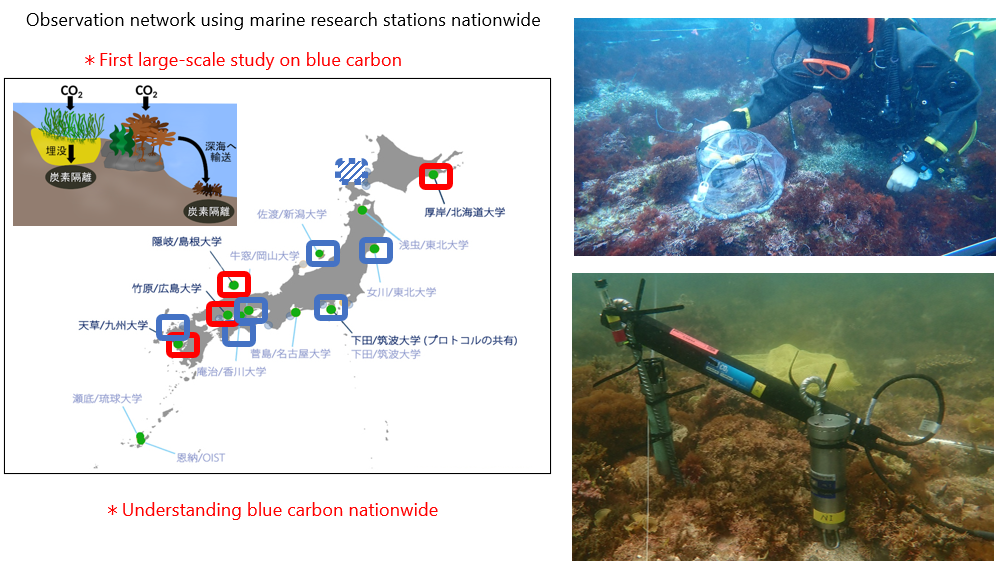
Field-based diving surveys of submarine CO₂ gas seepage.
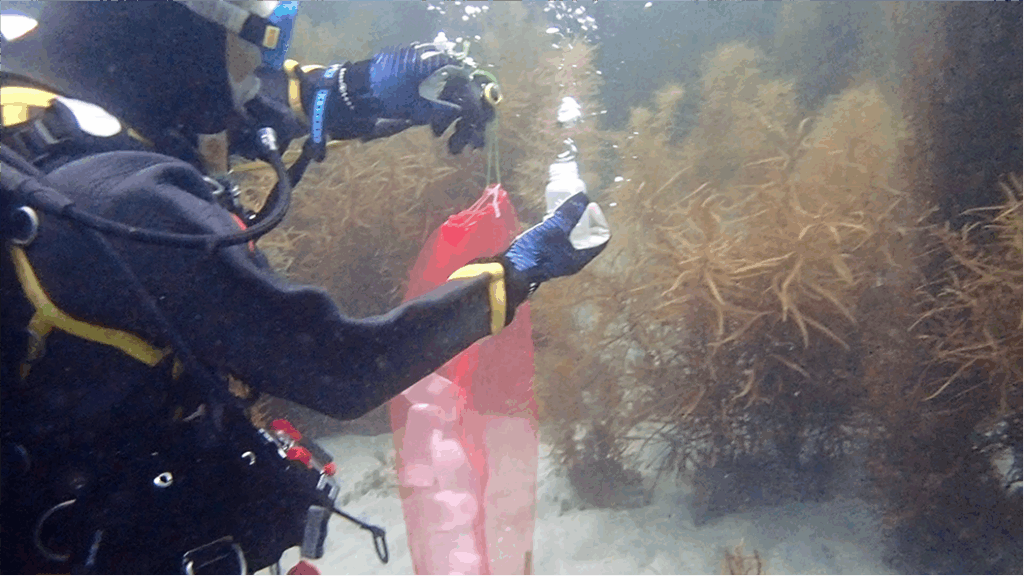
A benthic water-lifting device for increasing food (phytoplankton) availability in oyster aquaculture sites.
Co-cultivation of Giant Clams and Corals in Miyako Island.
Green Innovation Division
The Green Innovation Division plays a central role in advancing strategies for achieving land-based carbon neutrality through biological and technological innovation. The division is actively developing sustainable carbon capture and utilization (CCU) technologies. These include gas fermentation systems that use carbon monoxide (CO) and hydrogen (H₂) derived from the gasification of various organic materials, as well as direct utilization of CO₂ emissions from thermal power plants (in collaboration with Chugoku Electric Power Co.) and renewable hydrogen to produce high-value-added oils and bulk chemicals.
In addition, through collaboration with the A-ESG Science and Technology Research Center, the division is promoting the implementation of integrated bio-manufacturing technologies. Strengthening terrestrial carbon storage and contributing to the development of a Green Transformation (GX) system in cooperation with the National Institute of Advanced Industrial Science and Technology are also key areas of focus.
The division’s research contributes not only to environmental conservation, but also to resource security and agricultural sustainability. Recognizing the critical role of terrestrial ecosystems in achieving carbon neutrality, the division pursues innovative approaches that integrate agriculture, industry, and energy systems. Through both foundational and applied research on carbon cycling in terrestrial ecosystems, it supports Japan’s leadership in international efforts to mitigate greenhouse gas emissions.
Current Research Focus
Our current research addresses the urgent challenge of improving phosphorus use efficiency in agriculture. Phosphorus is an essential nutrient for crop production; however, Japan is entirely dependent on imported phosphate rock, the supply of which involves high CO₂ emissions due to transportation and is subject to global resource limitations.
The research focuses on plant species that develop specialized root systems known as “cluster roots.” These roots secrete large amounts of organic acids and enzymes that solubilize poorly available forms of phosphorus and organic matter, converting them into absorbable forms for plants. It has been demonstrated that intercropping with cluster-root-forming species significantly enhances phosphorus uptake and growth in neighboring crops.
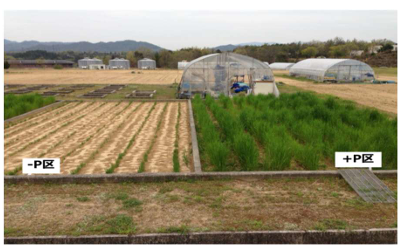
Figure: Phosphorus sufficiency (+P area) and phosphorus deficiency (-P area) fields managed at Hiroshima University
Furthermore, these root systems release substantial amounts of carbon compounds into the soil, suggesting the potential for subterranean carbon sequestration. These findings support a dual objective: improving nutrient use efficiency and increasing soil carbon storage. This research is expected to contribute simultaneously to the realization of sustainable agriculture and the mitigation of climate change.